- We work with global industries!

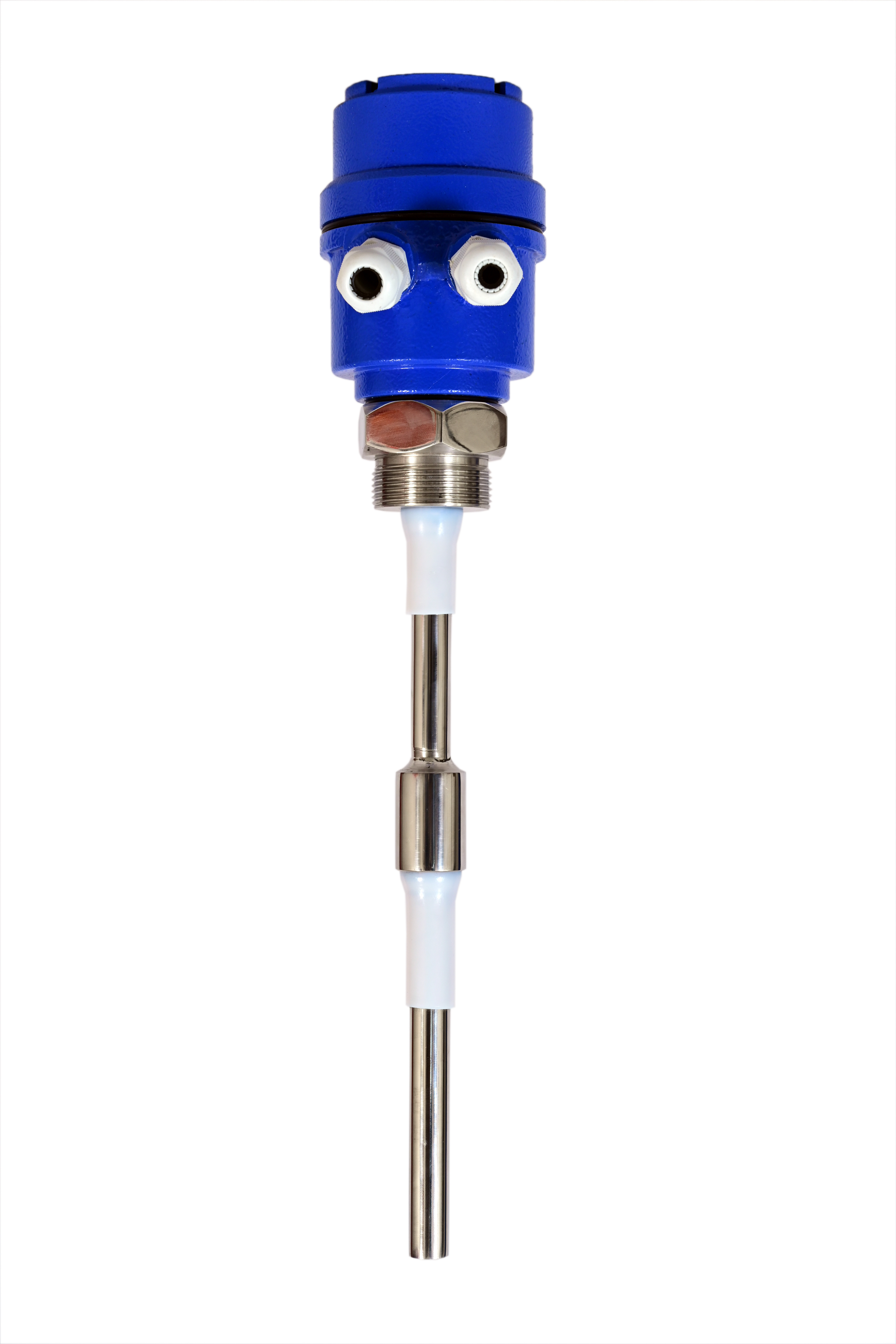
Conductivity Level Swith is a simple, low cost, point level measurement switch designed for level detection of conductive liquids having low densities, high viscosities, containing solid particles and to detect interface between non-conductive and conductive liquids. The probes work through the variation of the electrical resistance between the reference electrode and the level-control electrode. Conductivity level switches detect the level resistance when their electrodes are covered by the medium. If the tank is made of plastic, concrete, or any other nonconductive material, an additional electrode is required as a reference.
Suitable for conductive liquids like water.
Suitable for all sticky/non-sticky bulk solids and liquids.
Top mounting and side mounting options available.
Process temperature max 200 ºC.
Process pressure max. 3 bar.
Minimum and maximum fail safe field selectable.
Single point, multipoint, and pump-control switching options are available.
Compact size.
Integral version with universal power supply (15 to 60 VDC & 15 to 260 VAC).
Low power consumption.
No calibration required.
Various customized process connections available, including threaded and flanged options.
Remote electronics version available on request.
Exd version available—suitable for Gas Group IIC, T6 as per IEC 60079-1-2007 & IEC 600529-2001.
LWS Conductivity level limit switches are static rendered devices with no moving parts. A low voltage sine wave is provided into the liquid using a reference rod (or electrode).
The electronics continuously scan the sense rod (or electrode) for the presence of the sine wave signal on it.
As soon as liquid bridges the two electrodes, the signal appears on the sense electrode. The device gives the switching output by analyzing the received signal at the sense electrode.