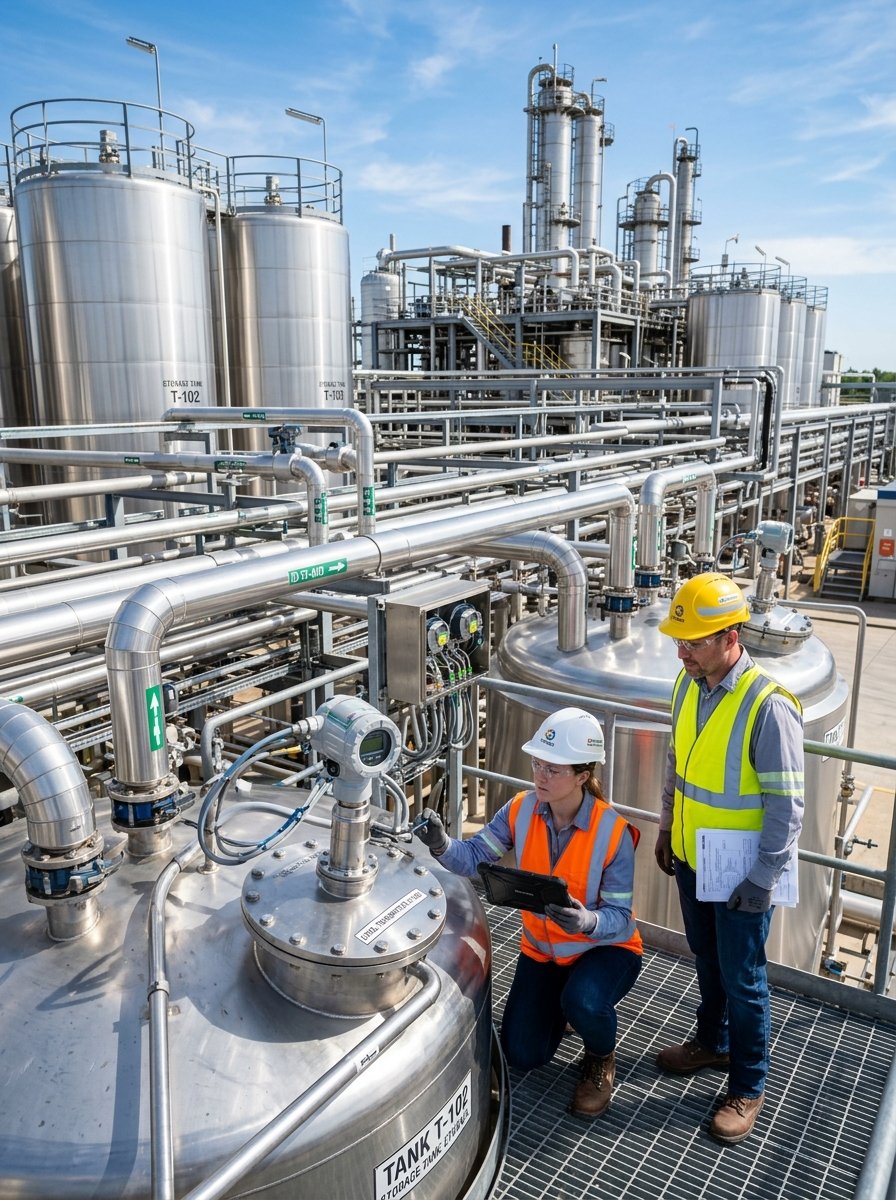
Your sensor says the tank is full. Your process says it's empty. You check the alarm — it fired again.
Another false trip. You've cleaned the probe, recalibrated the unit, and called the supplier twice.
And still, your ultrasonic level sensor keeps failing at the worst possible time.
If this sounds familiar, you're not alone. Across cement plants, chemical tanks, food processing lines, and wastewater facilities in India and worldwide — plant engineers face the same frustrating problem.
Ultrasonic level sensor alternatives are one of the most searched topics in industrial instrumentation today, and for a very good reason.
Ultrasonic sensors are reliable — but only under the right conditions.
The moment your process involves foam, heavy dust, high-pressure steam, extreme temperatures, or sticky material buildup, ultrasonic technology starts to struggle.
And in a plant environment, "struggle" means false alarms, downtime, damaged pumps, and wasted material.
This guide gives you a clear, no-nonsense look at six proven alternatives to ultrasonic level sensors.
For each one, we explain how it works, where it performs best, and where it doesn't — so you can make the right call for your specific application.
Who this is for: Plant engineers, instrumentation technicians, and procurement managers who already know ultrasonic sensors and need a reliable replacement or upgrade for a specific process condition.
Before picking an alternative, it helps to understand exactly why ultrasonic fails in your situation.
Ultrasonic sensors work by sending a high-frequency sound pulse toward the material surface and measuring the time it takes for the echo to return.
Simple in principle — but this method has real-world weaknesses.
Foam absorbs and scatters sound waves. Instead of bouncing back a clean echo, the signal gets lost in the foam layer. The sensor reads the foam surface as the actual level — or gets no echo at all and triggers a fault. This is extremely common in dairy tanks, wastewater aeration basins, and chemical reactors.
Heavy dust in the airspace above the material — typical in cement, fly ash, grain, and plastic pellet silos — absorbs the ultrasonic pulse before it even reaches the material. The result: no reliable echo, no reliable reading.
High humidity or steam in a tank creates temperature gradients that bend and distort sound waves. The echo returns from the wrong direction or the wrong depth. Boiler feed water tanks, hot process tanks, and autoclave systems are common examples.
Most standard ultrasonic transducers are rated up to 70–80°C. Above that, measurement accuracy drops significantly. In pressurised vessels, sound propagation behaves differently, making calibration unreliable.
Even though ultrasonic is a non-contact technology, the transducer face can get coated by condensate, sticky vapours, or product mist. A coated transducer transmits and receives a weaker signal — leading to drift and errors over time.
Key takeaway: If your process has any of the five conditions above, ultrasonic measurement will be unreliable regardless of how well you calibrate or maintain the sensor. The technology itself is the limiting factor — not the brand or model.
Now, let's look at what actually works.
A radar level transmitter uses microwave radio pulses — not sound — to measure level. It sends a microwave signal toward the material surface. When the signal hits the surface, it reflects back to the sensor. The transmitter calculates the distance based on the time taken for the signal to travel down and return. Because it uses radio waves (not sound), radar is completely unaffected by temperature, pressure, vapour, dust, or foam. The signal travels at the speed of light through any atmosphere — which is why it works where ultrasonic cannot.
Free-space radar is mounted at the top of the tank and fires the signal downward with no physical contact with the material. It works well for large open tanks and vessels.
Guided Wave Radar (GWR) runs the microwave signal down a rod or cable immersed in the material. It's ideal for narrow vessels, tanks with internal agitators, or applications with low-dielectric materials like light hydrocarbons.
Radar is the right choice whenever you need continuous, accurate measurement in conditions where ultrasonic fails — high temperature, high pressure, foam, steam, or vacuum. It's also the better long-term investment in applications where sensor failure causes serious process or safety risks.
Levtron's Radar Level Transmitter is designed for industrial-grade performance in exactly these conditions. It delivers 4–20mA output with HART communication, is available with various process connections, and is suitable for hazardous area classification.
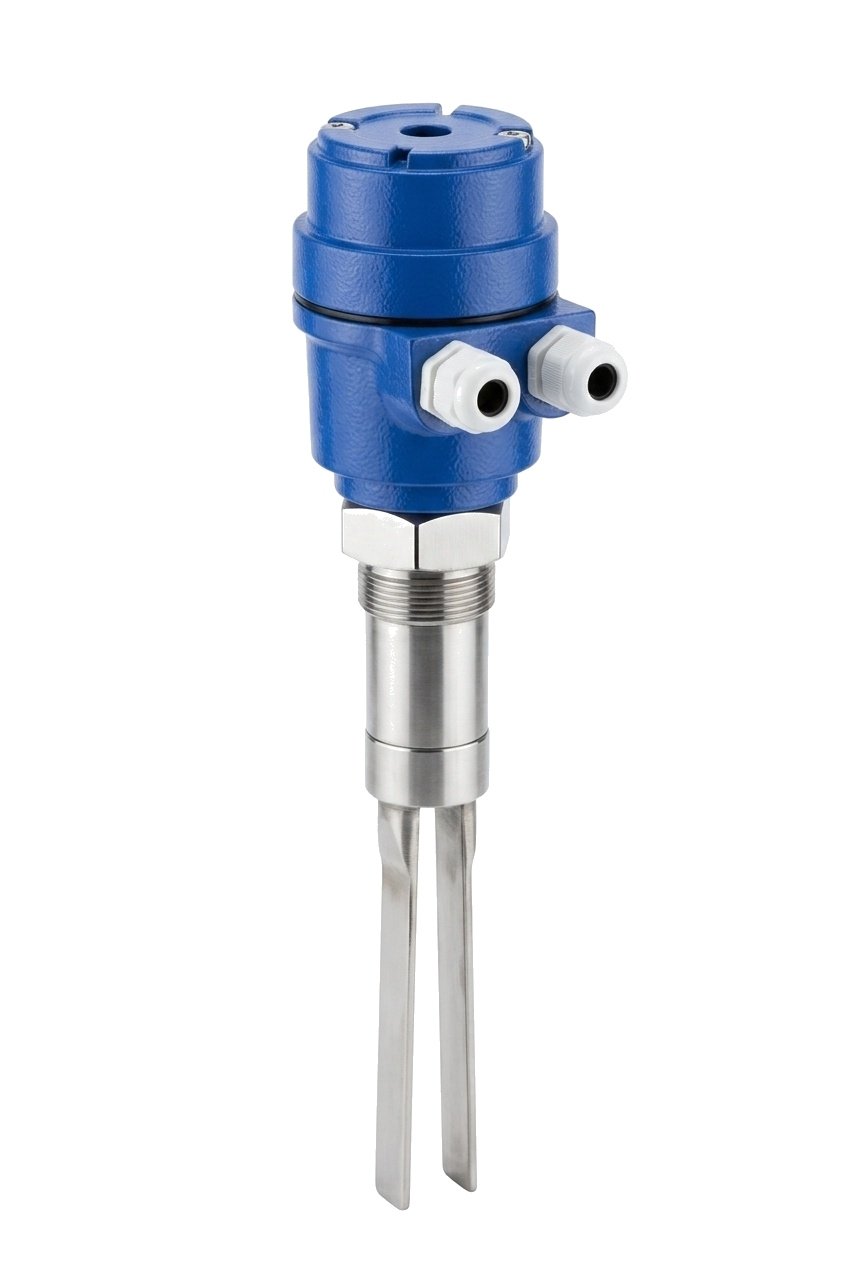
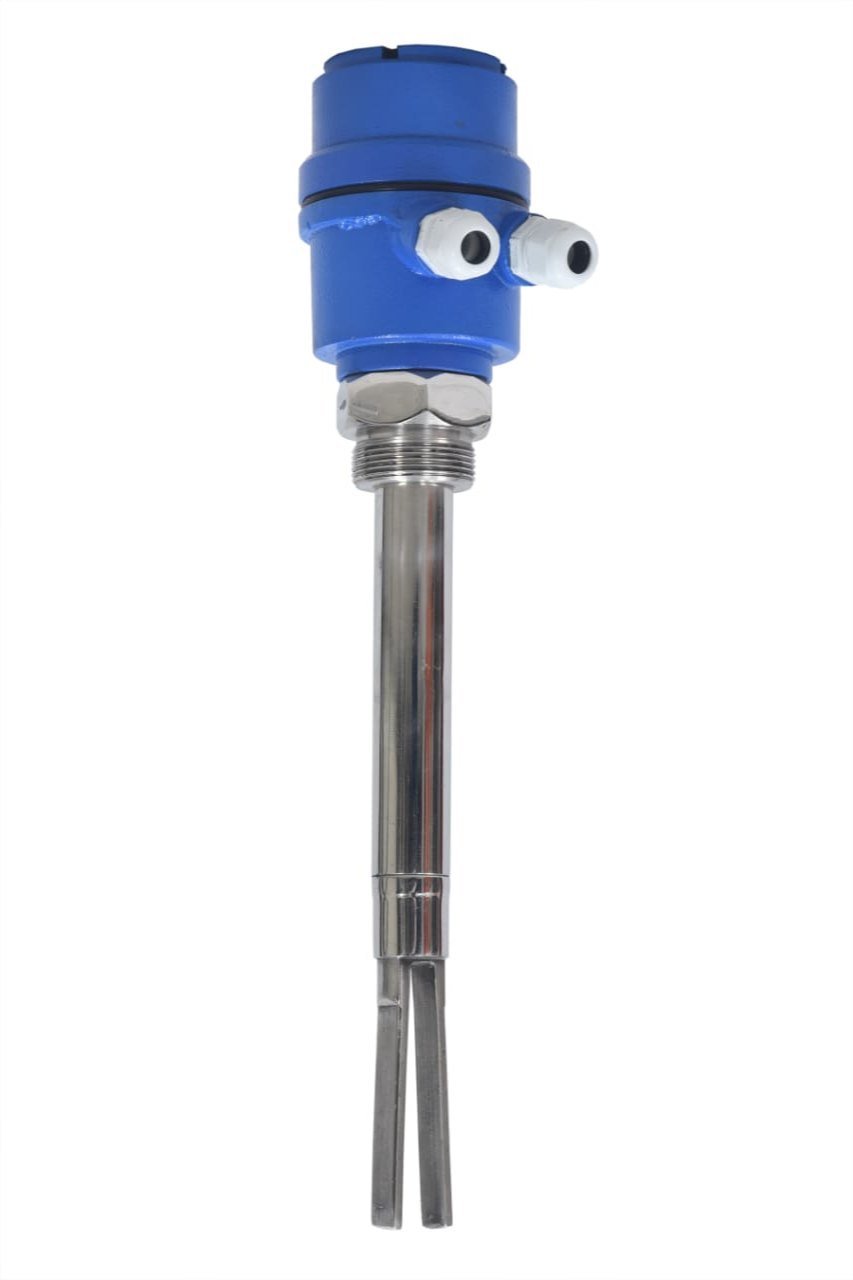
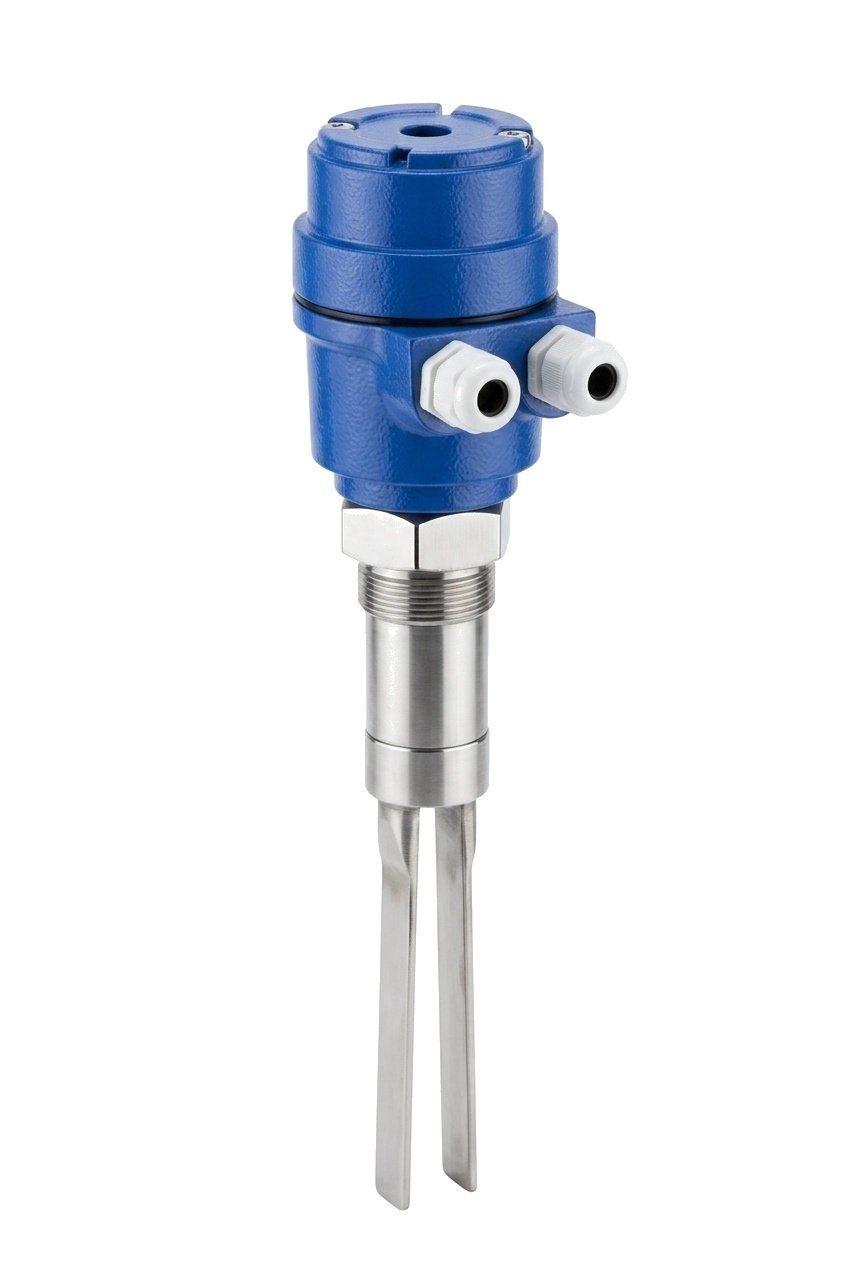
A vibrating fork level switch uses a piezoelectric crystal to vibrate two tines (the "fork") at their natural resonant frequency — typically around 85 Hz. When the fork is in open air, it vibrates freely. When material (liquid or solid) contacts the fork and dampens the vibration, the frequency drops. The electronics detect this change and trigger the switch output. No echo. No signal reflection. No air-gap dependency. The switch simply responds to whether material is physically touching the fork or not.
Ultrasonic is a continuous measurement technology. But in many applications — overflow protection, pump control, high-level alarms, or dry-run prevention — you don't need continuous level data. You just need to know: is material present at this point, or not? That's exactly what a vibrating fork switch does, and it does it reliably in conditions where ultrasonic fails completely. The vibrating fork works regardless of foam, turbulence, dust, or coating. Unlike float switches, there are no moving parts to jam or corrode. Unlike ultrasonic, there's no signal to scatter or absorb.
For liquids — use the compact or miniature vibrating fork switch. It handles water, oils, chemicals, and even slightly viscous fluids.
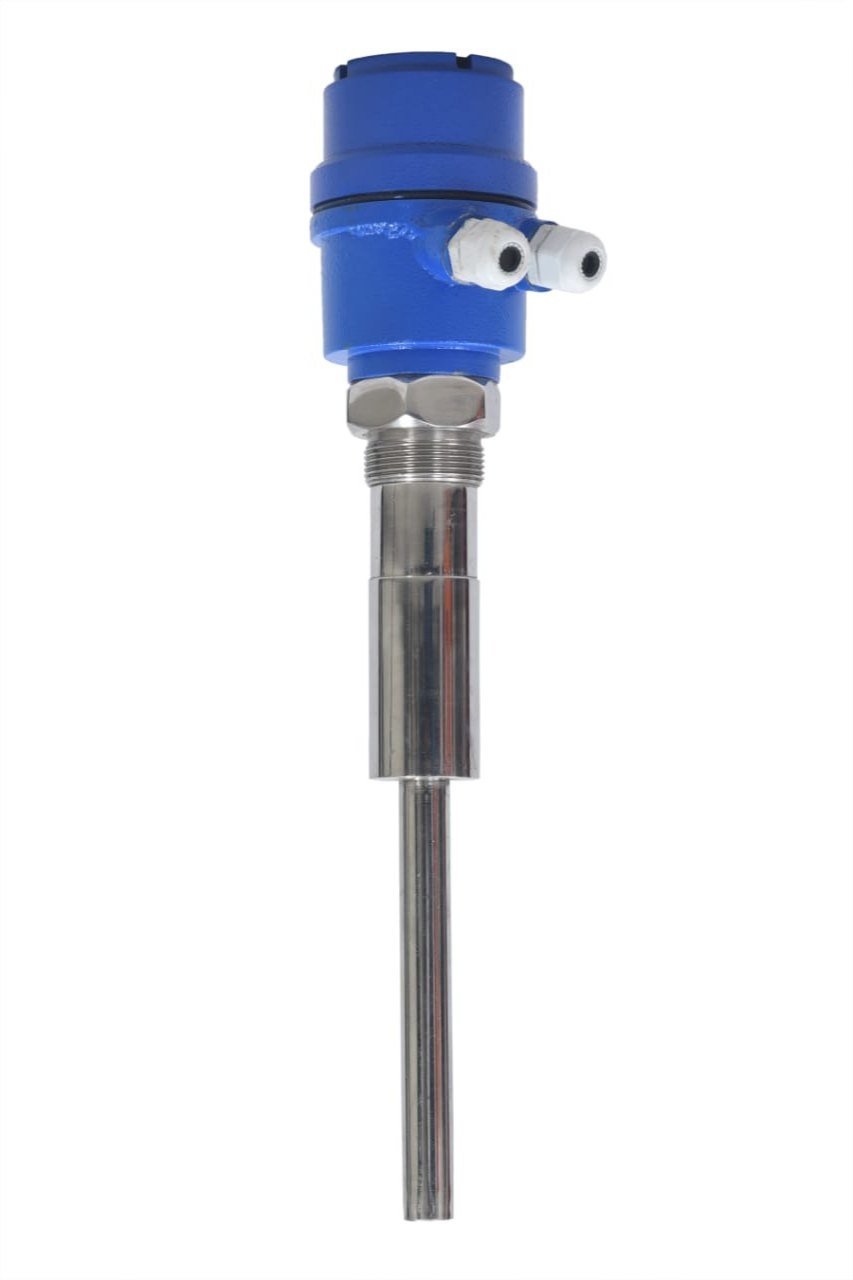
For powders and granules — use the vibrating rod switch. The single-rod design handles dry bulk materials, flour, cement powder, and plastic pellets without the fork tines clogging.
For deep silos — use the rope-type vibrating fork or rod switch. The flexible rope extension allows level detection at any depth in tall storage vessels.
Levtron manufactures the full vibrating fork range — standard, compact, miniature, rope-type, and rod variants — for both liquid and solid applications.
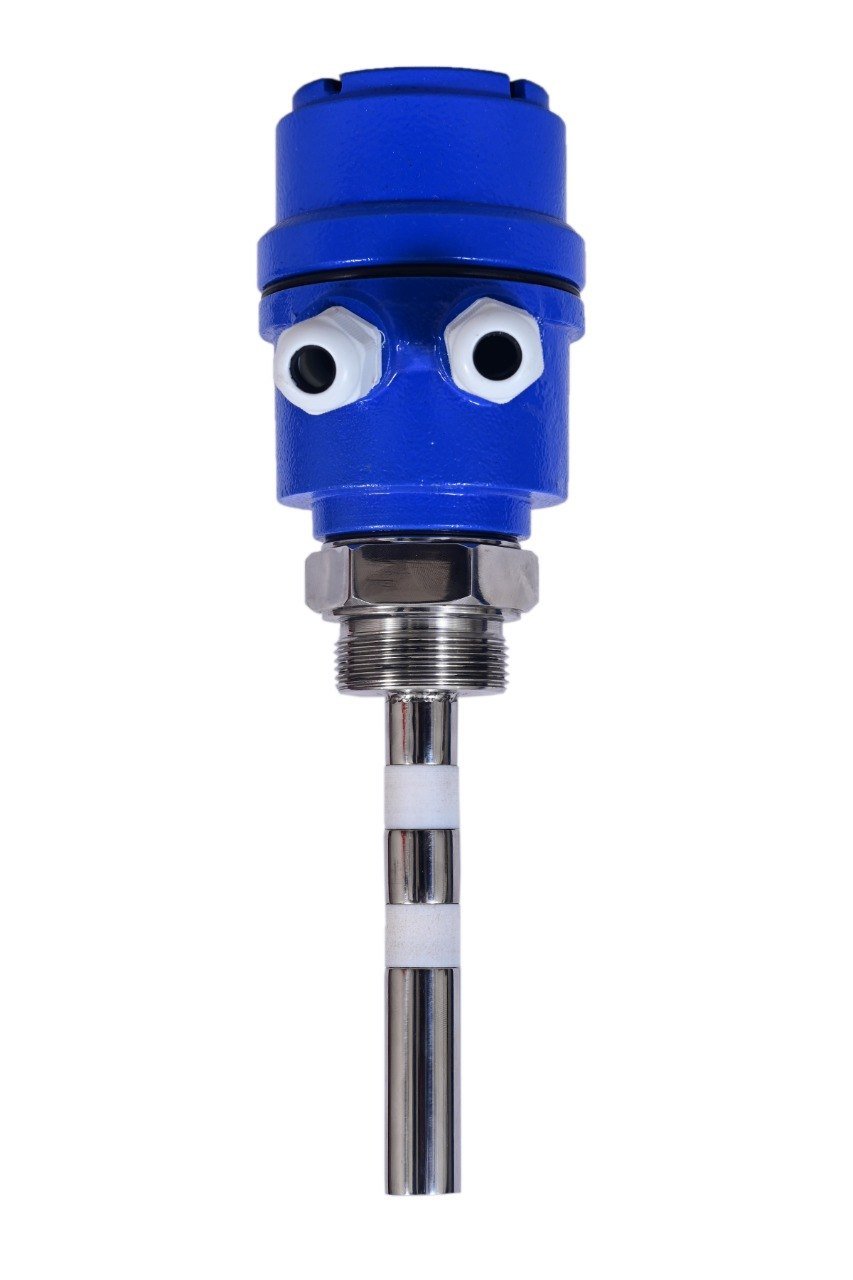
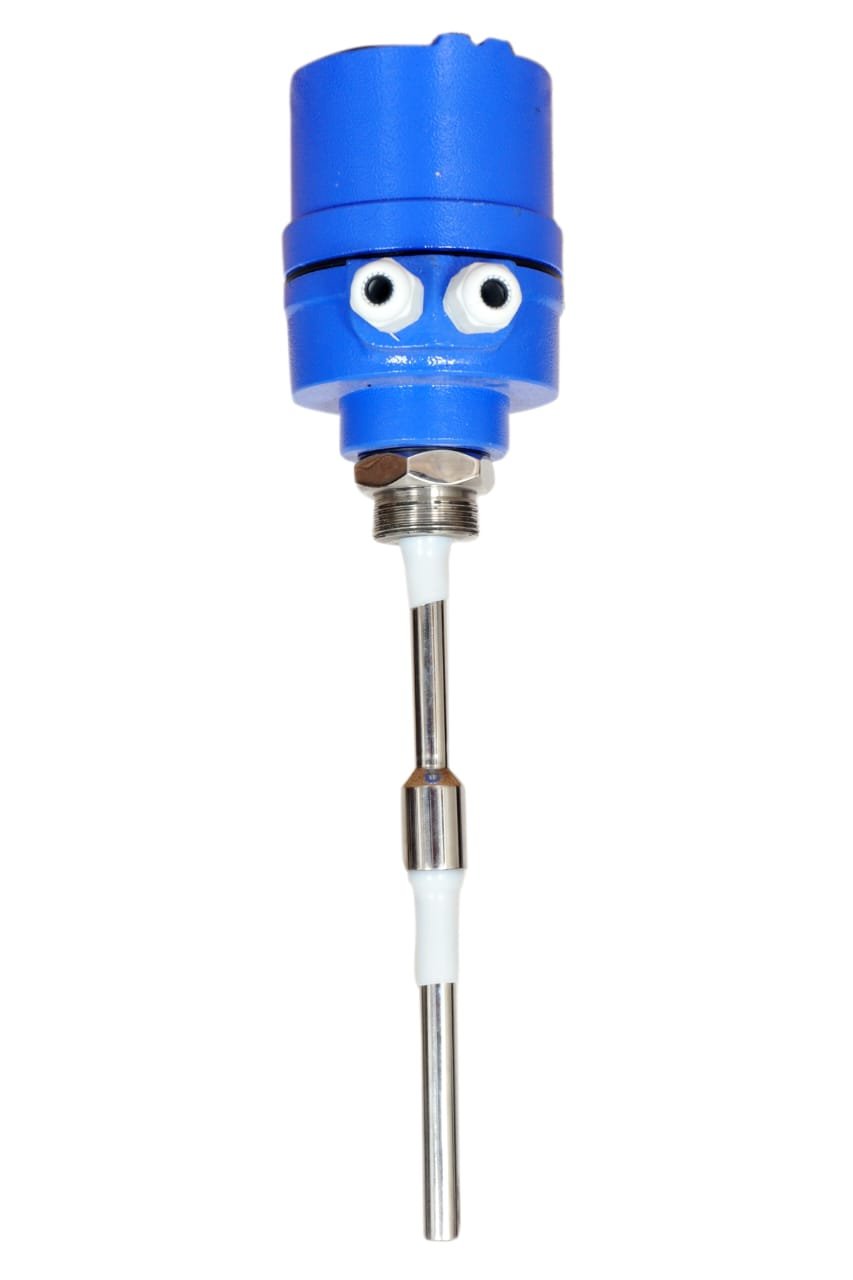
RF Admittance level switches measure the change in electrical admittance (a combination of capacitance and conductance) between the probe and the vessel wall. When material reaches the probe, the admittance value changes — and the switch activates. What makes RF admittance different from ordinary capacitance sensors is the active shield circuit. Both the sensing probe and the surrounding shield are maintained at the same electrical voltage. Because there's no voltage difference between them, any material coating the probe is automatically ignored — only the actual material-to-earth capacitance is detected.
This is the single biggest advantage of RF admittance over capacitance (and over ultrasonic in coating-prone applications). With standard sensors, a layer of sticky resin, paste, or hygroscopic powder on the probe creates a false reading — the sensor thinks material is present when the tank is actually empty. RF admittance completely eliminates this problem. If your ultrasonic sensor is triggering false alarms due to condensate or material coating on the transducer face — and you're dealing with a sticky or viscous material — RF admittance is your best alternative. It's designed specifically to work in exactly this kind of environment.
The standard RF admittance switch works for most general-purpose applications. The heavy-duty version handles extreme vibration and abrasion in mining and cement. The disc type is ideal for slurries and interface detection. The rope-type allows detection at any depth in deep silos or bins.
Levtron's RF Admittance range is built for the most difficult materials and environments. All variants use the active shield circuit for coating immunity.
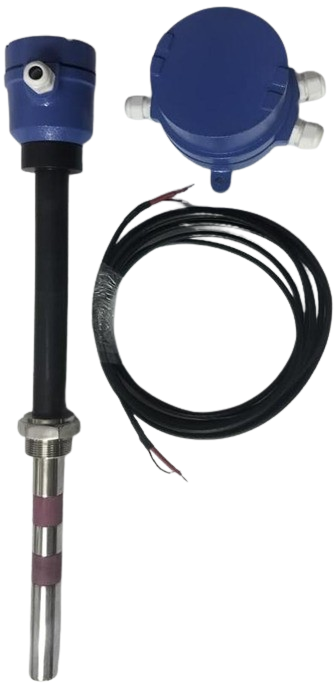
A capacitance level transmitter uses an immersed probe as one plate of a capacitor, and the vessel wall as the other. The liquid between them acts as the dielectric. As the level rises or falls, the amount of liquid surrounding the probe changes — and so does the capacitance value. This change is converted into a 4–20mA analog output that represents level continuously.
Ultrasonic needs an air gap above the liquid surface to send and receive signals. If the tank is pressurised, sealed, or has no clear acoustic path, ultrasonic simply doesn't work. A capacitance transmitter, by contrast, works completely inside the liquid — no air gap, no echo, no surface reflection required. It also handles turbulence and agitation much better than ultrasonic, because it measures the liquid surrounding the probe, not the surface position.
Capacitance transmitters depend on a consistent dielectric constant in the process fluid. If your liquid composition varies significantly between batches — say, different mixtures of water and solvent — accuracy can drift unless recalibrated. For most single-material applications, this is not an issue.
Levtron's Capacitance Level Transmitter provides reliable 4–20mA continuous output for a wide range of liquid applications, including corrosive and conductive fluids.
A rotating paddle level switch has a small paddle (or vane) driven by a low-torque motor. In empty space, the paddle rotates freely. When bulk material — grain, cement, flour, plastic granules — rises to the paddle level, it stops the rotation. The motor detects the stall and triggers the switch output. No sound pulse. No echo. No signal path through dust-filled air. The switch responds to one simple mechanical event: the paddle either rotates or it doesn't.
In a grain silo or cement hopper, dust concentration in the air can be extremely high — especially during filling. Ultrasonic signals get absorbed almost completely by heavy airborne particles. The sensor reads an empty silo when it's actually filling. This leads to dangerous overfills. A rotating paddle switch is completely immune to this problem. It doesn't rely on any signal propagating through air. The material either reaches the paddle or it doesn't — that's the entire measurement principle.
The 1-vane L-type works for lighter, free-flowing materials. The 2-vane and 3-vane designs handle medium-density powders and granules with better sensitivity. The 4-vane is for very light, fluffy materials that might not stop a single vane. The J-type is ideal for deep silos with installation on the side wall.
Levtron's Rotating Paddle range covers all vane configurations, with SS and MS construction options and IP67-rated enclosures.
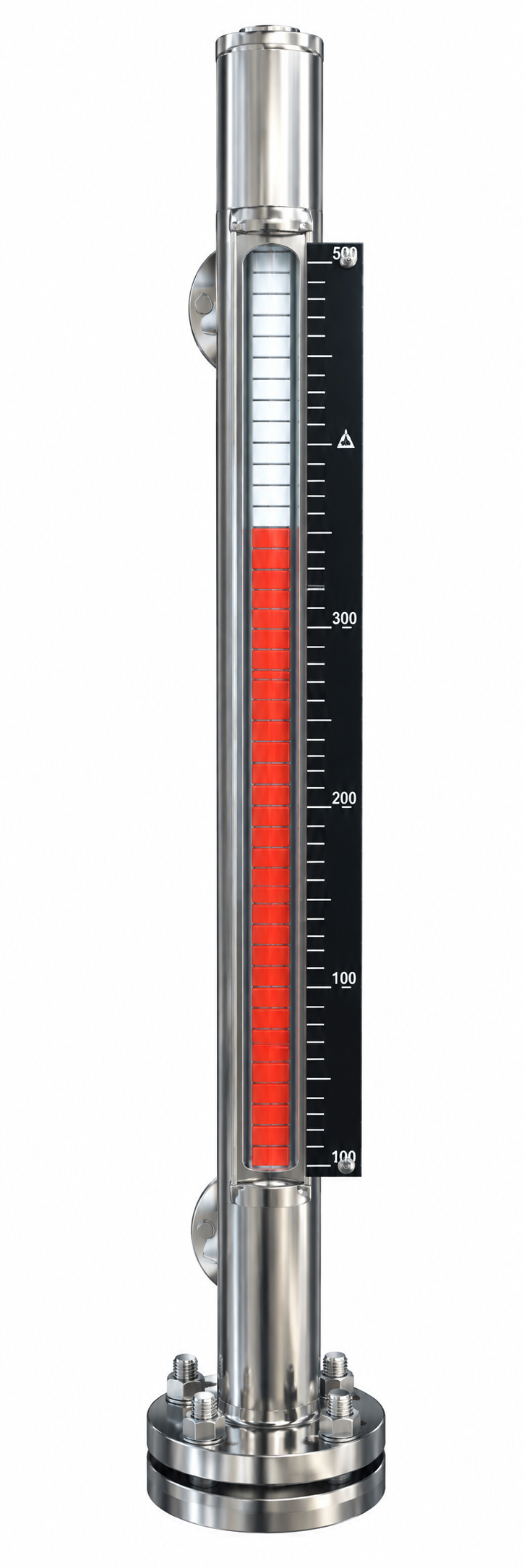
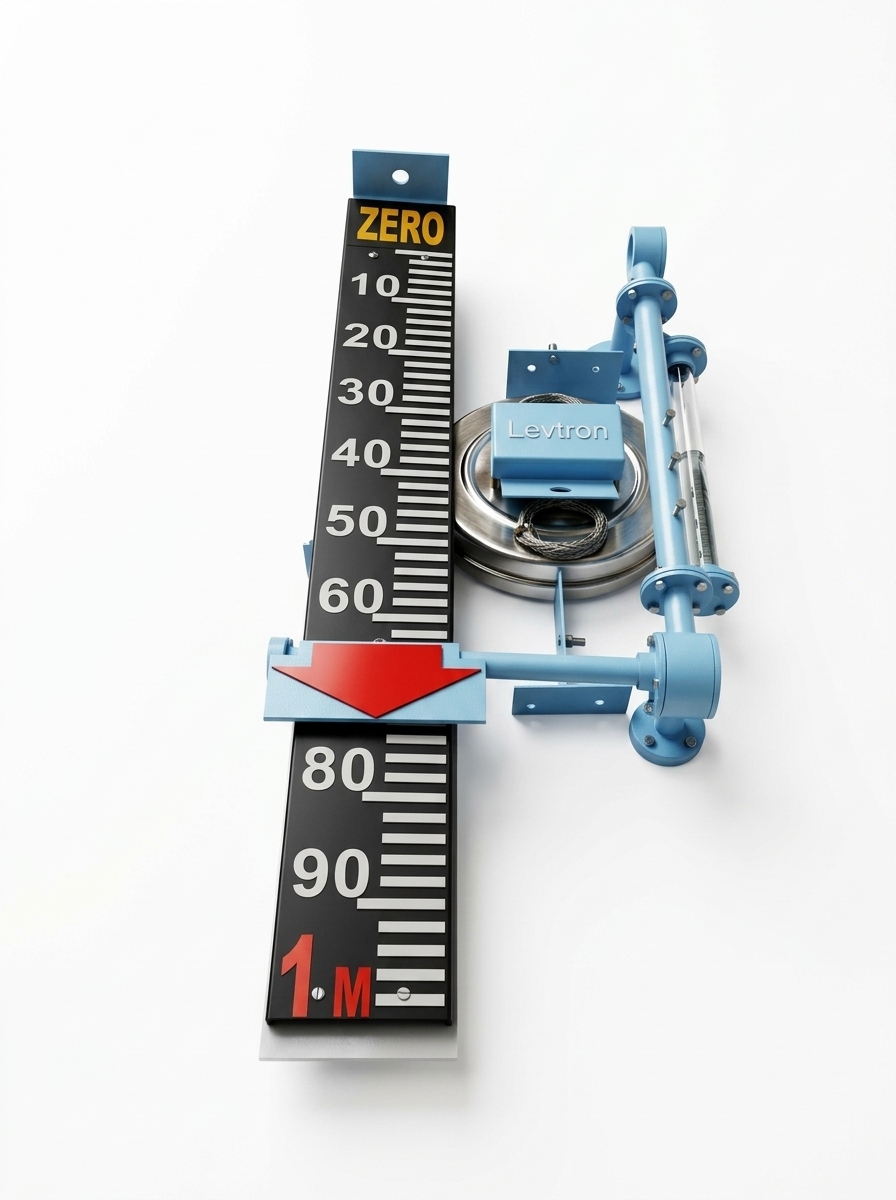
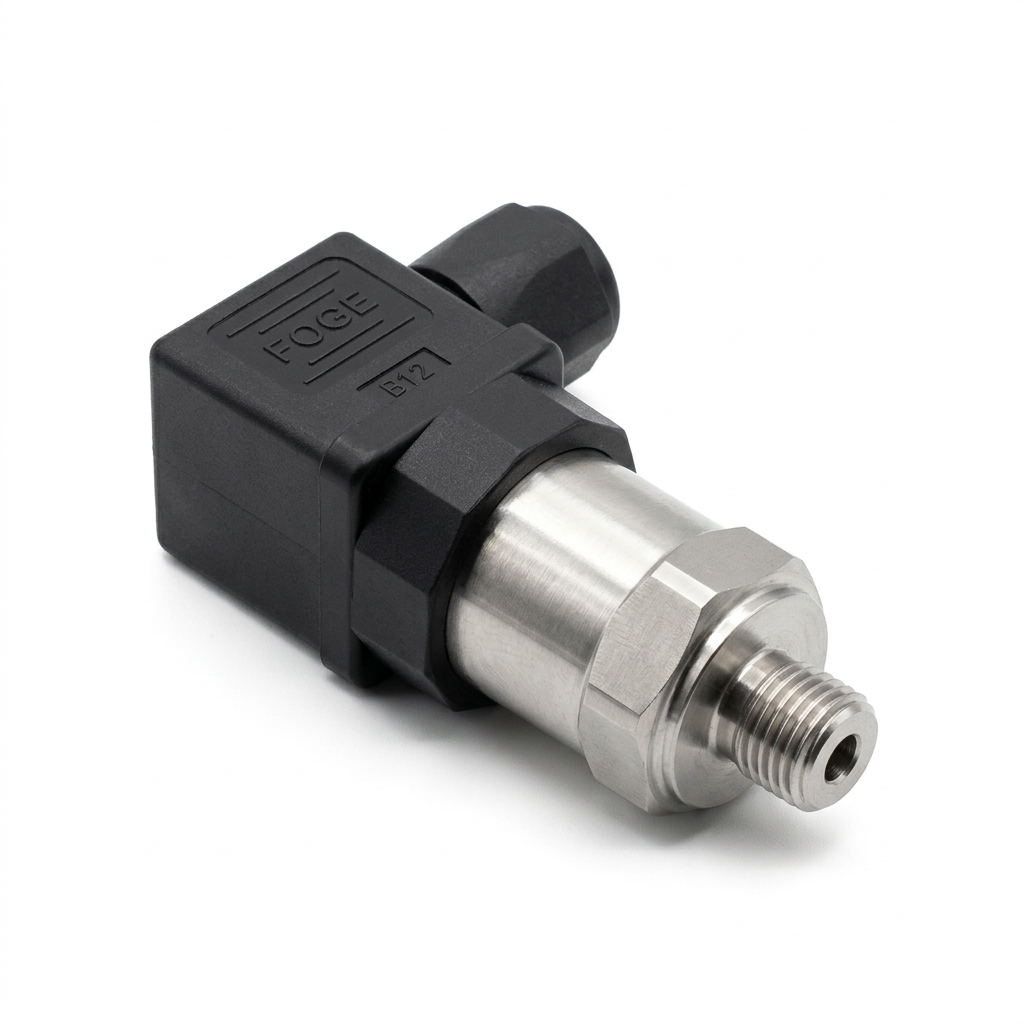
A differential pressure level transmitter doesn't measure level directly. Instead, it measures the pressure difference between the bottom of the tank (where liquid weight creates hydrostatic pressure) and the top (which is either at atmospheric pressure or a reference pressure). Since the pressure at the bottom of a liquid column is directly proportional to the liquid height, this pressure difference gives an accurate, continuous level reading — without any contact with the liquid surface whatsoever.
DP transmitters connect to the tank through two flange-mounted taps — one at the top and one at the bottom. The sensor itself is mounted externally on the pipe. Nothing enters the tank. Nothing reflects off the surface. No acoustic path is needed. This makes DP transmitters the natural choice for completely sealed vessels — boilers, steam drums, pressurised reactors, cryogenic storage — where ultrasonic installation is physically impossible or unsafe.
DP transmitters have a higher installation cost than ultrasonic — they require impulse lines, isolation valves, and proper tapping points. But in critical process applications, this upfront cost is far smaller than the cost of one sensor failure, one pump running dry, or one safety incident. Engineers who manage boilers and high-pressure systems know this well.
Levtron's DP Level Transmitter provides 4–20mA HART output and is compatible with flange-mounted process connections across high-pressure and high-temperature applications.
Use this table to see how each technology stacks up across the most common challenging conditions. This is the clearest way to match your application to the right sensor.
The following table:
| Technology | Works in Foam | Works in Dust | High Temp (>100°C) | Sealed/Pressurised Vessel | Measurement Type | Levtron Product |
|---|---|---|---|---|---|---|
| Ultrasonic | ✗ Limited | ✗ Limited | ✗ No | ✗ No | Continuous | UL Transmitter |
| Radar | ✓ Yes | ✓ Yes | ✓ Yes | ✓ Yes | Continuous | Radar Transmitter |
| Vibrating Fork / Rod | ✓ Yes | ✓ Yes | ✓ Yes | ✓ Yes | Point Level | Vibrating Fork Switch |
| RF Admittance | ✓ Yes | ✓ Yes | ✓ Yes | ~ Partial | Point Level | RF Admittance Switch |
| Capacitance | ✓ Yes | ✓ Yes | ✓ Yes | ✓ Yes | Continuous | Cap. Transmitter |
| Rotating Paddle | ✗ Not for liquids | ✓ Yes | ~ Partial | ✗ No | Point Level | Rotating Paddle Switch |
| DP Transmitter | ✓ Yes | ✓ Yes | ✓ Yes | ✓ Yes | Continuous | DP Transmitter |
Still narrowing down your options? Answer these four questions — and the right technology becomes obvious.
If you only need on/off switching — overfill protection, low-level alarm, pump cut-off — you need a level switch (Vibrating Fork, RF Admittance, or Rotating Paddle). If you need a 4–20mA continuous signal for control or display, you need a level transmitter (Radar, Capacitance, or DP).
Liquids → Vibrating Fork, RF Admittance, Capacitance, Radar, DP.
Dry bulk solids (grain, cement, pellets) → Rotating Paddle, Vibrating Rod, Radar.
Slurries or pastes → RF Admittance (disc type), Capacitance, DP.
Open tank → any technology can work; choose based on material and measurement type.
Sealed or pressurised → Radar, Capacitance, or DP Transmitter. Ultrasonic and rotating paddle will not work.
Foam → Radar or Vibrating Fork.
Heavy dust → Radar or Rotating Paddle.
Steam / condensation → Radar or DP Transmitter.
Sticky / coating-prone material → RF Admittance (the only technology designed specifically for this problem).
Still not sure? Every plant application has its own combination of variables — material properties, vessel geometry, temperature, pressure, and safety requirements.
Levtron's application engineers help you match the right sensor to your exact process — at no cost. Call us at 9730042725 or use the contact form.
In challenging environments — yes, radar is significantly better. It uses microwave signals that are completely unaffected by foam, steam, dust, temperature, and pressure. For a simple open tank with clean water, an ultrasonic sensor may still be the more cost-effective choice. But for anything more demanding, radar is the more reliable and accurate technology.
Guided Wave Radar (GWR) and high-frequency free-space radar offer the highest accuracy across a wide range of difficult conditions — typically ±1–2mm. For standard liquid applications, capacitance and DP transmitters also deliver excellent accuracy. Ultrasonic can match these figures in ideal conditions, but accuracy degrades quickly when process conditions are challenging.
No. Vibrating fork switches are point-level (on/off) devices — they detect whether material is present or absent at one specific level point. For continuous level measurement, you need a transmitter: radar, capacitance, or DP. A common setup uses a vibrating fork switch for overfill protection, paired with a transmitter for continuous monitoring.
For dusty silos — grain, cement, fly ash, plastic pellets — either a radar level transmitter (for continuous measurement) or a rotating paddle switch (for point detection) is the right replacement. Both technologies work completely independently of the air conditions above the material. Ultrasonic and optical sensors will not perform reliably in heavy dust.
Radar is the best non-contact option for foam — its microwave signal penetrates foam layers and reflects off the actual liquid surface below. For point-level detection, a vibrating fork switch also works well — it detects liquid directly through the foam when mounted at the right depth. Ultrasonic performs poorly in foam because the sound signal gets absorbed or scattered by the foam before it can return.
Yes. RF admittance switches handle both conductive and non-conductive liquids reliably. In fact, they're an excellent choice for conductive slurries and liquids where basic capacitance switches may give unreliable readings. The active shield circuit ensures that only the actual material-to-earth admittance change is measured, regardless of material conductivity.
The initial cost varies by technology. Radar transmitters cost more than ultrasonic, while vibrating fork and rotating paddle switches are comparably priced or lower. However, the real comparison isn't purchase cost — it's total cost including false trip downtime, maintenance, damaged pumps, and wasted product. In demanding applications, a reliable higher-cost sensor typically pays for itself within months.
Ultrasonic level sensors are good sensors — in the right application. But no single technology works perfectly in every condition.
When your process involves foam, steam, heavy dust, extreme temperature, high pressure, or sticky material, pushing an ultrasonic sensor into service isn't a maintenance problem — it's a technology mismatch.
The good news is that for every challenging condition ultrasonic can't handle, there's a well-proven alternative that can:
Foam or steam? Use radar. Heavy dust? Use radar or rotating paddle. Sticky coating? Use RF admittance. Sealed or pressurised vessel? Use radar, capacitance, or DP. Simple point-level in any tough environment? Use a vibrating fork or rod switch.
Making the right choice upfront saves far more than the cost difference between sensors. It saves downtime, maintenance hours, and process risk.
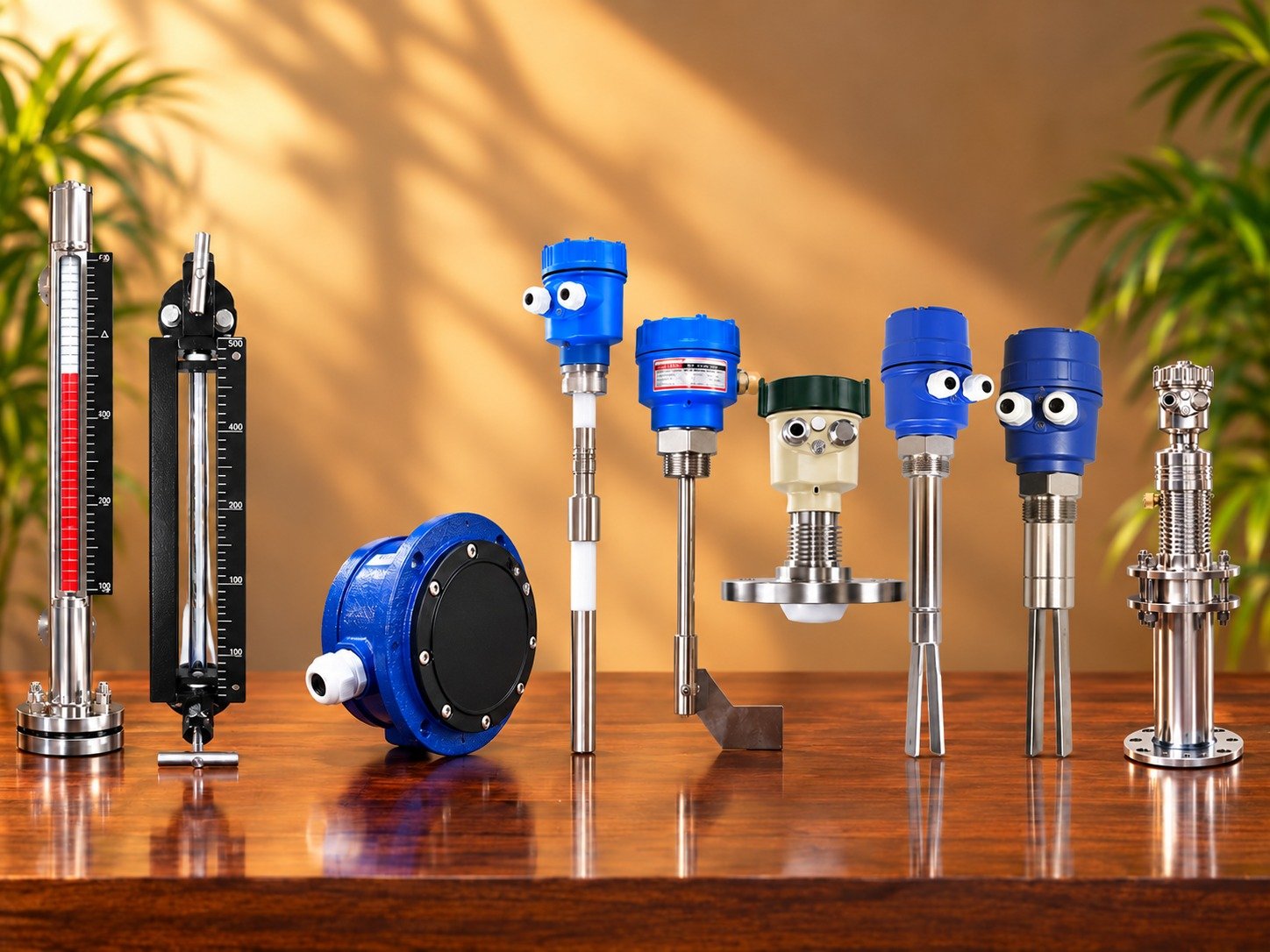
At Levtron, we manufacture all six technologies discussed in this guide — engineered and built at our facility in Pune.
If you're dealing with a level measurement problem in your plant, our team is happy to help you find the right solution for your specific application.